Krishna Janmashtami, one of the most revered and vibrant festivals in the Hindu tradition, marks the birth of Lord Krishna—the eighth avatar of Lord Vishnu.
Falling on the Ashtami Tithi of Krishna Paksha in the month of Bhadrapada, this festival symbolizes the victory of righteousness (Dharma) over evil, divine love, and spiritual enlightenment.
In 2026, devotees worldwide will celebrate Krishna Janmashtami on Friday, September 4, 2026. From grand midnight prayers to colorful Dahi Handi celebrations, here is everything you need to know about celebrating Janmashtami this year.
📅 Key Date & Auspicious Muhurat Timings
Lord Krishna was born at midnight during the Rohini Nakshatra. The Nishita Kaal, or midnight prayer window, is considered the most sacred time to perform Janmashtami Puja.
- Janmashtami Date: Friday, September 4, 2026
- Ashtami Tithi Begins: September 4, 2026
- Nishita Kaal Puja Window: 11:57 PM to 12:43 AM (Midnight, September 4–5)
- Dahi Handi Festivities: Saturday, September 5, 2026
🌸 The Spiritual Significance of Janmashtami
According to sacred Hindu texts, Lord Krishna was born in a prison cell in Mathura to Devaki and Vasudeva during a stormy night. Sent to earth to end the tyrannical rule of his maternal uncle, King Kansa, Krishna's life embodies divine joy, spiritual wisdom, and righteous action, as immortalized in the Srimad Bhagavad Gita.
Observing Janmashtami is traditionally believed to bring peace, prosperity, and emotional strength, while helping devotees let go of past karmic burdens through selfless devotion (Bhakti).
🪔 Step-by-Step Janmashtami Puja Vidhi
Observing Krishna Janmashtami at home involves simple yet profound rituals:
1. Sankalp & Fasting
Devotees wake up early, take a bath, and make a formal resolve (Sankalp) to observe a day-long fast, either Nirjala or Phalahar.
2. Altar Preparation
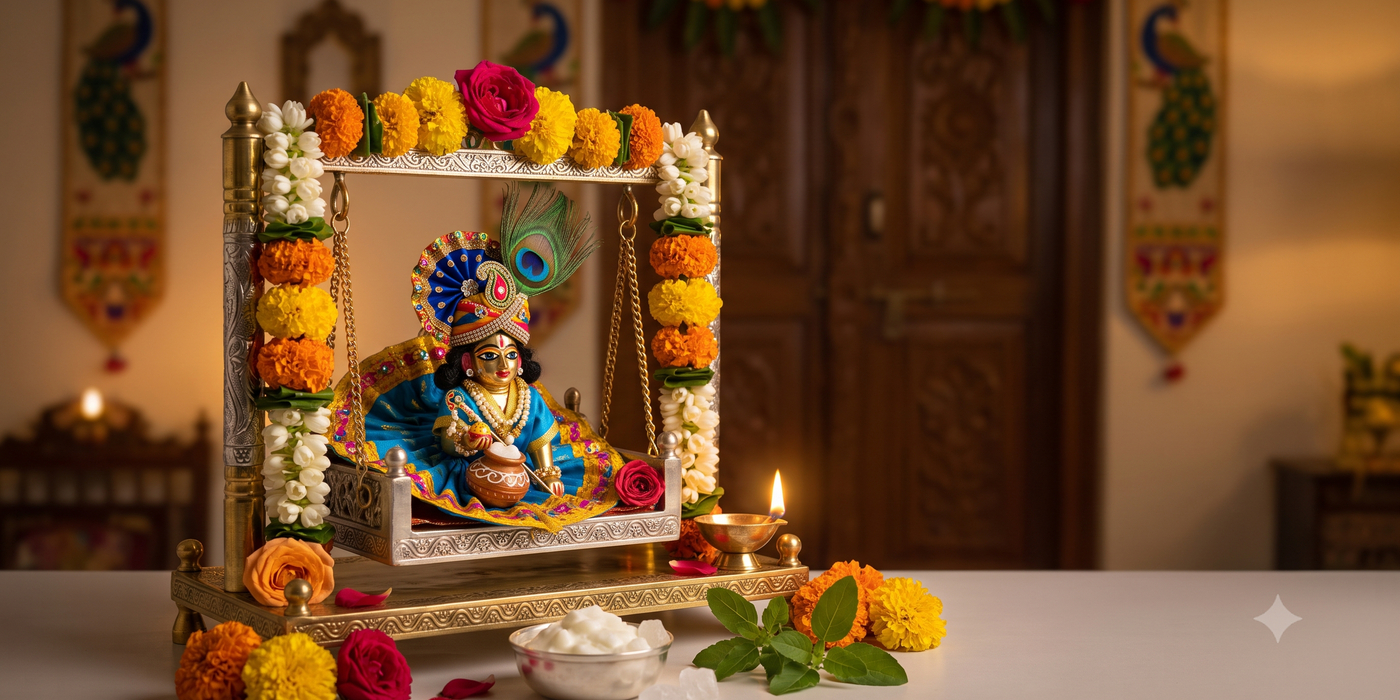
Clean the puja room and decorate the home with fresh flowers, peacock feathers (Mor Pankh), and rangoli. Place a small swing (Jhula) for Bal Gopal (Baby Krishna).
3. Abhishekam (Divine Bath)
At midnight during the Nishita Kaal, bathe the idol of Laddu Gopal with Panchamrit—a sacred mixture of milk, curd, honey, ghee, and sugar—followed by clean water.
4. Shringar & Offerings
Dress the deity in vibrant clothes and a crown (Mukut). Offer fresh butter (Makhan), sugar candy (Mishri), and Tulsi leaves.
5. Aarti & Kirtan
Light a brass lamp (Diya), sing devotional songs, gently rock the swing, and perform the midnight Aarti.
6. Parana (Breaking the Fast)
The fast is traditionally concluded after the midnight prayers or once the prescribed Ashtami Tithi period ends, depending on the observance followed. Devotees then partake in Panchamrit and Prasad.
🍯 Dahi Handi: Celebrating Krishna's Playfulness
The day following Janmashtami, September 5, 2026, is celebrated as Dahi Handi, especially in Maharashtra and Gujarat.
Human pyramids are formed by energetic teams known as Govindas to break earthen pots filled with curd and butter, suspended high in the air. The tradition recreates Krishna's playful childhood antics in Gokul.
💡 Quick Tips for Janmashtami Fasting & Celebrations
🍎 Fasting Alternatives
If health constraints prevent you from observing a strict fast, consider a Sattvik diet consisting of fruits, milk, sabudana, and makhana.
🌿 Tulsi Requirement
Ensure Tulsi leaves are picked a day prior, on September 3, as plucking Tulsi on Ashtami Tithi or Ekadashi is avoided in some traditional practices.
📖 Devotional Reading
Spend time reading Chapter 10 of the Srimad Bhagavatam or reciting the Vishnu Sahasranama during the evening hours.
🦚 Celebrate Janmashtami with Devotion
Janmashtami is more than a celebration of Krishna's birth. It is a reminder to embrace Dharma, cultivate Bhakti, and trust divine wisdom even during challenging times.
May Lord Krishna's teachings bring peace, clarity, and joy into your life.
Radhe Radhe! 🙏🦚