The monsoon season in Northern and Central India brings dynamic energy, rain-drenched greens, and a series of festivals celebrating love, nature, and devotion. Among these, Kajari Teej—also known as Kajali Teej, Badi Teej, or Satudi Teej—holds a special place in the hearts of millions.
Observed on the third day of the dark fortnight (Krishna Paksha Tritiya) in the Hindu lunar month of Bhadrapada, Kajari Teej honors the divine union of Lord Shiva and Goddess Parvati. It stands as a testament to deep marital commitment, patience, and the strength of womanhood.
Mythological Beginnings and Sacred Lore
The word Kajari traces its connection to dark, rain-bearing clouds (Kajal) and the rich tradition of Kajri folk songs sung across Uttar Pradesh, Bihar, and Rajasthan during the rains. Deep spiritual narratives ground the observance:
The Penance of Goddess Parvati
Goddess Parvati underwent intense tapasya (penance) across 108 births to win Lord Shiva as her husband. Touched by her unwavering dedication, Lord Shiva accepted her as his divine consort on this sacred day. Fasting women pray to Mata Parvati and Lord Shiva for marital harmony, happiness, and mutual respect, while unmarried women seek blessings for a loving life partner.
The Legend of the Poor Brahmin and the Sattu
A widely recited vrat katha (fasting story) tells of a poor Brahmin who could not afford sattu (roasted grain flour) for his wife's Teej fast. Driven by devotion, he slipped into a merchant's shop at night only to gather a tiny portion of flour, ghee, and sugar for his wife's ritual. When caught, he confessed his sole intent was fulfilling a holy vow rather than personal gain. Moved by his honesty and his wife's piety, the merchant blessed the couple and gifted them provisions, establishing sattu as the central prasad of this festival.
Key Rituals and Observances
1. Pre-Dawn Sargi and Nirjala Fast
The day begins early before sunrise with Sargi, a wholesome pre-fast meal prepared by mothers-in-law or elders. Following this, women observe a strict Nirjala Vrat (fasting without food or water) that lasts until the moon rises at night.
2. Solah Shringar (The 16 Adornments)
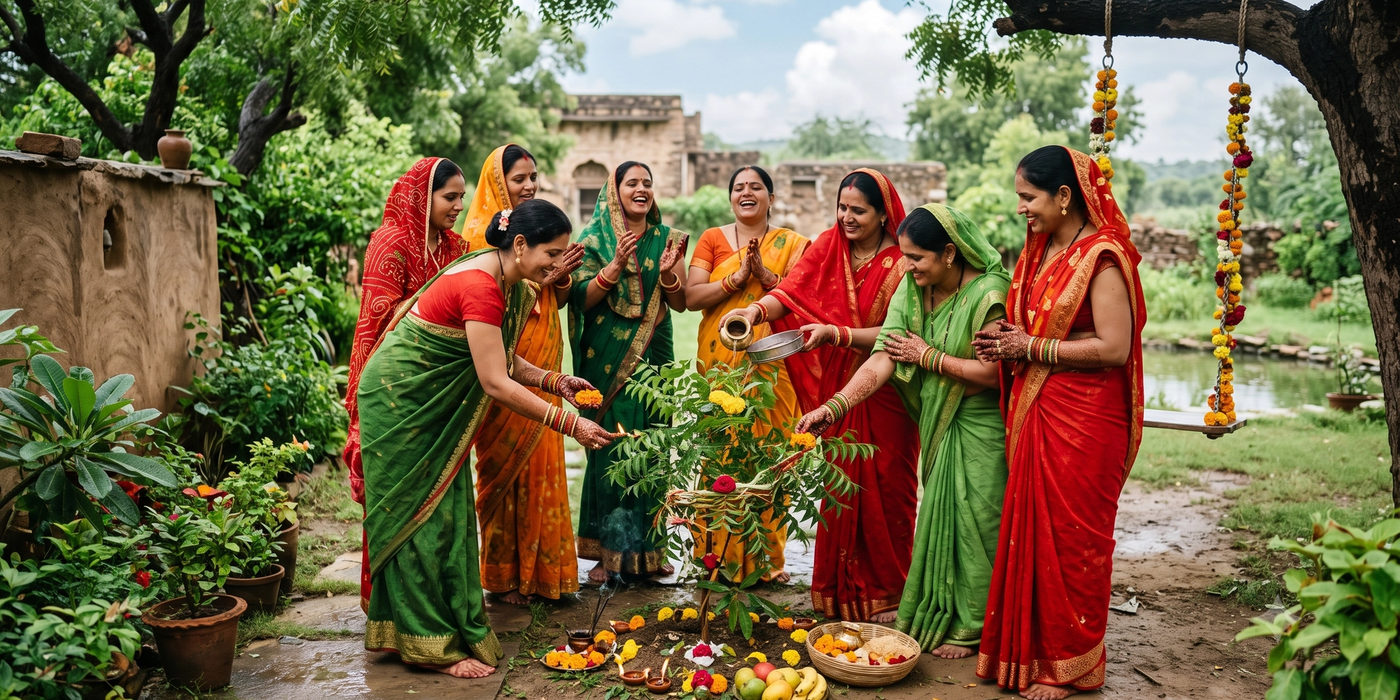
Women dress in bright traditional attire—predominantly shades of red, green, and yellow—symbolizing fertility, prosperity, and auspiciousness. Intricate henna (mehndi) designs adorn hands, alongside glass bangles, sindoor, and traditional jewelry.
3. Neemdi Mata Worship
A central aspect of Kajari Teej is worshipping Neemdi Mata. A branch of a neem tree is installed near a small clay enclosure or pond-like setup. Devotees offer:
- Fresh flowers, akshat (unbroken rice), roli, and sandalwood paste
- Sacred adornments including sindoor, bindi, and ribbons
- Fresh monsoon fruits and sweets
The bitter neem tree represents protection, physical well-being, and maternal warmth, filtering out negative influences.
4. Sattu Offering
Roasted gram, wheat, or barley flour is combined with ghee, jaggery, or sugar to craft structured sattu rounds. These are offered during the evening puja and shared among family members to break the fast.
5. Moonrise Arghya
As night falls, devotees gather to await the sighting of the moon. Water (Arghya) is offered to the moon god using a silver or brass vessel, often poured through a sieve or over a decorative branch. Prayers are offered for family peace and longevity, after which women break their fast with water and sattu prasad.
Cultural Vibrancy Across India
- Rajasthan: In Bundi, the Kajli Teej Mela features a grand public procession of Teej Mata through historical streets, accompanied by decorated elephants, traditional dancers, and musicians.
- Uttar Pradesh & Bihar: Rural and urban communities gather around swings hung from large trees, singing traditional Kajri folk melodies about rain, nature, and devotion.
Kajari Teej weaves spiritual devotion, cultural heritage, and communal joy into a meaningful celebration of love and resilience.